


Annika Enders on the Get Stoked Girls Podcast
- Dec 12, 2025
- 9 min read
A conversation about ice and rock climbing, guiding, mentorship, and finding balance.

Meet Annika Enders — ice climber, rock climber, and guide.
We met Annika at Presque Isle in Marquette, Michigan, the home of her favorite local climb, The Pinnacle. Our conversation traced her roots in the Midwest, her path into outdoor recreation, and the realities of building a career in the industry. We dug into the hard parts too, including burnout, imposter syndrome, and the persistent gender imbalance in leadership and guiding. We talked about ice and rock climbing, giving back to the climbing community, and the value of all-women trips, as well as organic farming, crafting, music, community, and cats.
Listen to this episode of Get Stoked Girls and get notified of new releases by subscribing on Spotify, Apple, YouTube or wherever you get your podcasts!
The Roots of a Life Outdoors
Rhi: Tell me a little bit about how you came to live in this area and what this place means to you.
Annika: I grew up in Stevens Point, Wisconsin, and eventually made my way to the Upper Peninsula where I spend most of my time outside. I climb rock and ice, guide, and work on a small farm. Presque Isle is one of my favorite places in the world. The Pinnacle, my favorite local climb, is just around the corner from where we are sitting. The black rock here is some of the oldest on Earth, the cliffs sit right on the water, and you can do almost any outdoor activity within ten minutes of town. You can climb, surf, hike, ski, even explore cave systems.
I did not actually like the outdoors as a kid even though my mom always brought us outside to hike, bike, ski, and camp. I cried every time she put me in a kayak. But I think it planted something in me that showed up later.
Rhi: So then was it climbing that created that spark for being outdoors?
Annika: The first time I ever climbed was in third or fourth grade when my mom signed me up for a YMCA rock climbing camp. We went to Devil’s Lake, climbed, and did an overnight camping trip, which was a blast. I did it twice, but I don’t think I was old enough to fully appreciate it. It wasn’t until high school that it truly clicked for me through Adventure Leadership classes. We did team-building exercises, climbed on the indoor wall, used the outdoor ropes course, and even had a circus unit where I learned to ride a unicycle. We practiced rolling whitewater kayaks in the pool and even did scuba lessons there. All of that exposure to outdoor and adventure skills is what really sparked my passion for being outside.
Rhi: When did you realize outdoor recreation might be a career path for you?
Annika: All through high school I assumed I would study music because I played saxophone and spent most of my time in band. My mom, who has a master’s in music, warned me that studying it might make me lose my love for it, and I’m glad I listened. I didn’t know what I wanted to do until I took Adventure Leadership classes, where our teacher invested so much in her students. Around the same time, my family started taking summer trips to Mount Bohemia, and the guides there told me they studied Outdoor Recreation at NMU. I had never heard of NMU, but the more time I spent in those classes, even helping as a student assistant, the more it felt like the right path. What I loved most was seeing how much those classes changed people. Kids who struggled in school would come alive when they worked with their hands or faced challenges on the ropes course. Watching those moments of growth was incredibly powerful, and I also just loved being outdoors and learning from teachers I admired.



Introducing Others to the Joy of Climbing
Rhi: How did you get started as a climbing instructor?
Annika: I never had a clear career dream. My mom stayed home and homeschooled us, so I always imagined I would grow up, go to college, meet my husband, and become a mom, but that didn’t happen. After graduating with a degree in outdoor recreation, I went back to the job I had in Virginia and took things one day at a time. When an opportunity arose to be a climbing instructor, I took it and got my SPI, though most of my climbing has always been for fun. I do guide, but I honestly do not love it. People think guiding means climbing and adventuring all day, but it often leads to burnout. You spend the whole day outside without actually climbing much yourself, and by the end you don’t want to go back out. There are great parts, like meeting interesting people and being outdoors, but it can take a toll, especially as an introvert.
Rhi: What do you love most about guiding in the Midwest?
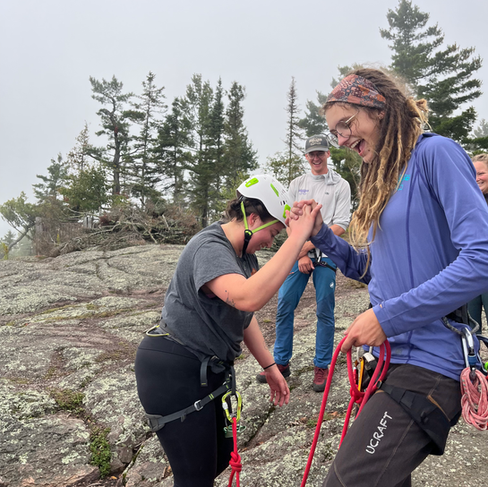
Annika: I think what I love most is introducing people to a place they’ve never been. A lot of folks who sign up for guided trips aren’t from around here, and it’s fun to show them something new. I especially enjoy guiding people who have never climbed before because you get to see it through fresh eyes and watch them either fall in love with it or not. That’s probably my favorite part.
Rhi: You guide ice climbing as well as rock climbing. When did you first get into ice climbing?
Annika: I got into ice climbing through the Michigan Ice Climbing Festival in Munising. My first year was rough because I didn’t know anyone and had no experience. The next year, during my internship at Downwood Sports, it clicked. I got to climb, fell in love with it, and eventually became the volunteer coordinator.
What I love most is how different it is and how unattainable it felt at first. Being on the ice, smashing tools into frozen waterfalls and playing in world-class terrain is just exhilarating.
Rhi: I know you’ve been involved with the UP Climbers Coalition youth program. Can you tell me about that and what it’s like working with the kids?
Annika: Just this past spring, the UPCC asked me to help restart their kids climbing program, which had been shut down since COVID. I’m so glad I said yes because the kids are amazing. We’ve had two climbs so far with nine to fifteen kids each time, mostly between six and twelve, many of whom had never climbed before. Their little fingers are natural climbers, and it’s so fun to see them get started young. Giving back like this has become an important part of my connection to guiding and the outdoors.
Rhi: You’ve been guiding with Forged Guides, which your friend started. How did that opportunity come about, and what has it been like working with them?
Annika: Mason and I started climbing together in Virginia, and he eventually started his own business, Forged Guides. We stayed in touch, and this past summer he reached out about helping guide women’s climbing courses, which has been amazing. That is my favorite part of guiding, seeing all the awesome women who come for those courses. Forged Guides has been around for about two or three years, and this was my first year guiding all-women trips with them.


Being a Woman in Guiding & Overcoming Self-Doubt
Rhi: What are some of the barriers and challenges you’ve faced as a woman in this field?
Annika: I like to joke that there are men who climb and climbing men. The men who climb are down-to-earth, welcoming, and supportive, and they’re the people I love climbing with. The climbing men have big egos and make it hard for anyone else, whether you’re a participant or a co-guide, because you constantly feel like you’re not good enough. People don’t always take you as seriously as they would a male guide. I’ve also heard similar experiences from other women across sports and guiding roles. Even guiding with other women can be tricky because of favoritism, like bosses favoring the “pretty climbing girls.”
Women just have different experiences in guiding and leadership positions, and it can be harder to navigate and succeed.
Rhi: Imposter syndrome is often tied to gender equity. What does that look like for you, and how does it show up in the context of climbing?
Annika: I was really shy growing up and often felt like I didn’t fit in anywhere except at home. That carried over into school and later into the outdoor rec program I studied in. Many students already had industry experience while mine was mostly what my parents had done with me growing up. I often felt like I didn’t belong or that I wasn’t experienced enough. That same feeling has followed me into workplaces in the outdoors. I tend to downplay my own accomplishments and compare myself to others who seem more skilled.
Imposter syndrome is a roller coaster. It comes in waves and is influenced a lot by who you surround yourself with. Sometimes I feel like I don’t have the skills or experience, but then someone new or less experienced will say, “Wow, that’s so cool what you do,” and it reminds me that my experiences are meaningful. Comparison is a big part of it. Looking at what others have done can make you doubt yourself, but having conversations with others who feel the same way has been validating and helps me manage it better.
Rhi: How does imposter syndrome shape the way you guide and teach?
Annika: The biggest thing for me is speaking in clear, simple language and avoiding overly technical terms. When I hear someone talk like that, I instantly feel judged, so I try to explain things in a way everyone can understand. It’s about inclusivity and not putting myself on a pedestal. I admire guides like Mason from Forge Guides because he has climbed incredible things like El Capitan but never brags. I try to do the same and project my own experiences onto new climbers. I remember feeling scared, uncomfortable, and out of place when I first climbed, so I make sure to create a space where everyone feels safe, encouraged, and understood. My goal is to be relatable so people see that if I can do it, they can too.


Empowering Women Through Climbing
Rhi: You’ve led a lot of all-women climbs and trips. What makes those experiences so meaningful for you and for the participants?
Annika: The biggest thing is that there is zero judgment. You can be wild, emotional, nervous, or anything in between, and everyone is immediately supportive. On the recent women’s climb I led with Forged Guides, most participants didn’t know each other, but there was already a strong bond. If someone panicked or cried while climbing, the group would encourage them, cheer them on, and just be there for each other.
You don’t have to be an expert to feel accomplished. It’s all about positivity, support, and enjoying each other’s company while doing something challenging and fun. It’s hard to put into words, but there’s a real sense of camaraderie and partnership among women on these trips.
Rhi: Is there a story or moment that really captures the essence of what these experiences are about?
Annika: Every trip has moments like this, but one stands out. There was a woman who had never climbed before. She was smiling the whole time, even when she started to panic midway. What was so inspiring was that she felt completely safe, physically and emotionally, to express all her feelings. When she finally reached the top, there were hugs, laughter, and happy tears. It perfectly captured the supportive and empowering atmosphere of these women’s climbs.
Burnout, Balance & Rediscovering Joy
Rhi: Have you ever experienced burnout in the industry, and what does it feel like?
Annika: The biggest burnout I experienced was in Virginia at a kids’ program with one- to three-week backpacking trips. The kids did rock climbing, caving, mountain biking, kayaking, and more. I worked as a trip leader, instructor, assistant director, and director. Living where you work left no boundaries, and I was on 24/7. I got so burned out that I didn’t want to climb, cave, kayak, or do any outdoor activity at all. It can happen if you’re not careful.
Rhi: How do you reconnect with the joy of those activities?
Annika: Last July, I was coming up to Marquette for a friend’s wedding and planned a little break from Appalachia. A friend and I went climbing at the Pinnacle on Presque Isle with muffins and coffee. It reminded me why I fell in love with climbing, just having fun with a friend and enjoying the outdoors. That moment made me realize I needed to step back and treat climbing as a hobby again. I went back to Virginia, decided to quit my job, and moved back to Marquette. Since then, I have had so much more time for fun climbing.
Rhi: What advice would you give to other guides who might be experiencing burnout?
Annika: If guiding is burning you out, take a break and try something else if you can, especially if it’s financially possible. For me, working on a small farm has been amazing. It’s peaceful, hands-on, and gives me time to climb for fun again. I also do pressed flower art, spend time with my cats, tend to the greenhouse and chickens at home, and play music in the Marquette Symphony and city band. Having these creative outlets and grounding activities helps me stay balanced and connected to myself.


Get Stoked Girls
Rhi: What is your parting advice to get girls stoked?
Annika: Don’t underestimate yourself. If an opportunity comes up, take it. You never know where it might lead. Everyone you see doing amazing things was a beginner once. Starting somewhere is the most important part. Outdoor activities can feel intimidating because of the gear and cost, but there are ways to get involved. Many nonprofits, Facebook groups, and local communities provide gear or connect you with people who can bring you out.


