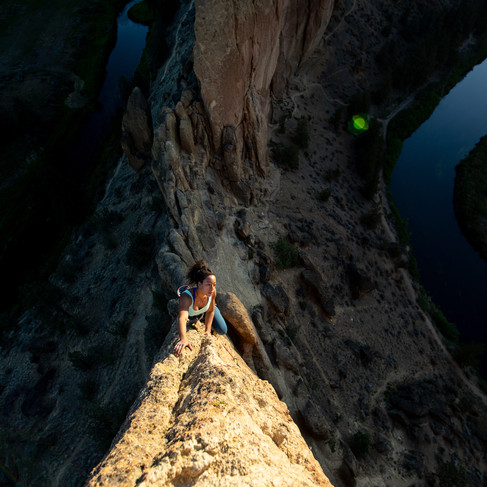
Irene Yee on the Get Stoked Girls Podcast
- Rhianna Walzer
- Jun 26, 2025
- 8 min read

Updated: Oct 30, 2025
A conversation about community and representation in the outdoor world.

Meet Irene Yee — West Coast rock climbing photographer who celebrates the fun and accessible side of climbing through her creative, vibrant images. She is a National Geographic contributor, is internationally published (Climbing Magazine, Alpinist, Outside Magazine), and has worked with companies such as The North Face, Marmot, Outdoor Research, Mountain Hardware, and the Honnold Foundation.
In this candid conversation, Irene shares her journey into climbing and photography, discussing how she found community and representation in the outdoor world. She reflects on the challenges and importance of visibility for women, BIPOC, and LGBTQIA2+ climbers and how that shapes her creative work. Irene also talks about the role of media in shaping climbing culture, the value of teaching and giving back, and offers practical advice for those learning technical skills safely, all while highlighting the power of passion and inclusivity in the sport.
We connected with Irene at Red Rock Canyon just outside Las Vegas, Nevada — the place where she began climbing and first picked up a camera.
Listen to this episode of Get Stoked Girls and get notified of new releases by subscribing on Spotify, Apple, YouTube or wherever you get your podcasts!
Getting into Climbing
Rhi: How did you start climbing?
Irene: I really started climbing when I moved to Vegas. I had grown up just outside the Gunks in New York, but I wasn’t an outdoorsy kid. My family focused more on academics, so that’s where my energy went. When I got to Vegas and the cheap gym membership, I figured I’d give it a shot. There had always been a spark of interest, but I didn’t think climbing was for me. I had never seen anyone who looked like me doing it, and it felt like something for a different kind of person.
Then I joined a meetup group, and everyone was kind, safe, and excited to teach. I got lucky with that community, and it made a huge difference. Not everyone has that experience, so it’s important to welcome new climbers and share what we know. That kind of support really matters.
Rhi: What was the transition like from indoor to outdoor climbing?
Irene: I went to the gym twice and then climbed outside, so my indoor and outdoor climbing progressed together. I definitely consider myself more of an outdoor climber. I much prefer being outside.
The second time I went to a meetup, someone asked if I wanted to climb outside. I was surprised and thought, “Wait, I can do that?” They had all the gear and knew what they were doing, which made it much easier for me to get started.

The Art of Adventure Photography
Rhi: How did you start photographing?
Irene: I got into photography out of curiosity. My first camera was a small Sony lens that attached to my phone back when phone cameras were still pretty bad. I just liked taking pictures, mostly memories with friends or things I wanted to remember.
It started as a fun hobby, and then I realized I not only loved it but was actually good at it. I bought a used DSLR from a coworker and started experimenting. I didn’t know what I was doing, but I was excited to learn. Everything was self-taught. I made a lot of mistakes, but I didn’t mind. I just kept trying things until I figured out what I liked.
Rhi: How did climbing and photography come together?
Irene: Photography and climbing came together naturally. I was climbing, and since photography started as a way to capture memories, it made sense to photograph what I was doing. At first, it was just for fun, taking photos of my friends and days out climbing.
As I met more people through climbing, I started taking more photos. Social media played a big role as well. I don’t think I would have kept going without the support and encouragement I found online. It helped me realize I wasn’t alone. Even though I didn’t see many women or people of color climbing in real life, social media made it easier to find and connect with others. That connection became a turning point. I started to see a bigger purpose in my photography. It went from a casual hobby to something more intentional. I wanted to show that all kinds of people belong in climbing, especially those who don’t always feel represented.
Rhi: Is there a project that is most meaningful to you?
Irene: In 2022, I did a project with Fujifilm called I Too, Will Be Wise, where I photographed three women over 40 adventuring outdoors. It meant a lot to me because there's such a gap in how we represent aging in the outdoor world. We see tons of young athletes with endless energy and strength, but as we get older, that changes.
I realized we rarely see older women, queer folks, or really anyone outside the usual image continuing to adventure as they age. But I know so many incredible women who’ve kept going through all kinds of life changes, like motherhood and career shifts. I wanted to show that. So this project was about imagining and celebrating what life outdoors can look like in the next chapters.
I wanted to show that adventure doesn’t have an age or a single image.


Why Representation Matters
Rhi: When you first got into climbing and photography, what did representation in those spaces look like, and how have you seen it evolve?
Irene: I think conversations were always happening. People felt what it was like to be the only woman or person of color in a space, but it wasn’t talked about openly before. You definitely notice when you are the odd one out. Someone once explained it to me like this: everyone else just gets to be, but when you are the only woman on a crew, people are always noticing you. That creates a lot of pressure.
At first, I didn’t notice it as much in climbing. I think that is because I wasn’t looking for it. I didn’t have the words or education to name what I was feeling. But over time, especially with the conversations happening in recent years, I have learned to recognize it more clearly.
As a woman of color, I was trained to absorb things. To stay quiet, not push back, and not correct anyone. Looking back, I see how much I was doing that. Now it is slowly changing. I catch things sooner and I am more willing to speak up. But it takes time. First, you have to recognize what is happening. Then you have to decide how it makes you feel. That is different for everyone. Just because something does not bother one person does not mean it will not affect someone else. Both responses are valid and everyone deserves the space to say something if they need to.
Rhi: In what ways has limited representation impacted the direction of your work?
Irene: That’s exactly what has shaped my work. I’m very intentional about who I choose to photograph. It’s important to consistently create and share media that shows people they can see themselves represented. Choosing who I photograph is a deliberate act.
Being able to capture that in a photo and help people feel seen in the moment is powerful. So for me, it’s really about opening myself up to others’ stories and truly listening and understanding.
Rhi: Let’s talk about teaching, since giving back is such a big part of your mission. Earlier, you mentioned how your community supported and taught you when you were starting out. Can you share why teaching is so important to you now and what giving back means in that context?
Irene: I teach clinics that combine climbing skills with photography. When I started, there was no clear way to learn this, so I wanted to create a course to guide beginners. My teaching covers how to climb safely and how to capture good photos. I believe both parts need to be taught together for a complete experience.
I also focus on patience, especially with women and people of color, giving them space to learn and make mistakes without pressure.
Rhi: Where can people find information about your upcoming clinics?
Irene: You can stay updated on my social media @ladylockoff. I also post sign-up info on my website when clinics go live. This year has been a bit unusual, so the schedule has been on hold.
Right now, we’re planning a clinic in Seattle in August, open to everyone, and another one in Vegas in late October. You can sign up for updates on the clinic page of my website — there’s a small email list where I share all the details.


The Role of Media
Rhi: Let’s shift gears and talk about the media industry’s role in climbing and representation. How do you see creators influencing the culture and shaping the environment in this space?
Irene: Creators play a huge role in shaping climbing culture. At first, social media was not widely accepted in climbing and early creators faced skepticism. I believe all types of creators are important. Elite athletes push limits, but they do not always show the relatable, human side of climbing. Creators who share everyday climbing experiences help open the community and make it feel more accessible.
Relatability matters a lot. Climbing can seem extreme and many people think it is not for them, but the truth is there is a wide spectrum, from casual weekend fun to serious competition, and everyone can find a place. Creators show that you do not have to be an expert or compete to enjoy climbing. You can start small and grow at your own pace. Humor also plays a big role. Climbing can be a little ridiculous, so it is great to see creators bring lightness alongside the serious side.
Rhi: How do you think media can improve when it comes to representation?
Irene: Representation starts with who is behind the scenes, not just who appears on screen. It’s important to work with people you trust and who understand or are open to your story. How you are treated during a shoot affects how authentically you’re represented.
Diversity isn’t just about featuring different people but also about who is making the decisions and creating the content. Many productions have become more diverse upfront, but the teams behind the scenes often remain homogenous.
To truly improve representation, it’s not just about who is on camera. We need more diversity behind the scenes in storytelling and media.


Get Stoked Girls
Rhi: What would be your final words of advice to get girls stoked?
Irene: You’ll feel uncomfortable at times no matter what you do, and that’s okay. You don’t have to love everything you try, and it’s perfectly fine to step away from something if it doesn’t feel right or supportive.
When I tell people to try climbing, I remind them there are many kinds of climbers and communities. If you don’t feel supported, you can always leave that space.
Learn technical skills at your own pace. Knowledge doesn’t change and can be built over time, so take the time you need and don’t rush.
Rhi: When it comes to learning technical skills, how do you recommend gaining experience safely? Like, there’s a balance between learning from guides, books, or videos and knowing when to “jump out of the nest.” What’s your advice for building experience while staying safe?
Irene: Research shows that women, people of color, and queer folks often underestimate their skills and feel they need to be overqualified before trying something. It can be hard to believe in yourself, and everyone has good and bad days. What helps me is going through the technical steps in my head like a checklist. For example, when I’m on a fixed line and feeling scared, I remind myself that the knot is tied correctly, the gear is locked, and my safety system is solid. Fear doesn’t go away, but understanding it helps me stay calm and confident.
Hiring a guide is a great way to learn safely, and you can request someone who shares your identity, like a female or queer guide. Even if they say no, asking shows companies there is demand. Feeling supported and having someone explain things clearly is key to learning. It’s also important to have space to make mistakes and correct them. I let people set up their gear and then help them double-check so they learn safely. Ultimately, find a learning environment where you feel comfortable asking questions. If it doesn’t feel right, it’s okay to look elsewhere. Learn at your own pace and tailor the process to fit your personality and style.